Excelsior vs. the Sunset: What the Price Gap Really Buys
November 19, 2026
November 19, 2026
In the third quarter of 2026, the median single-family home in the Excelsior/Portola area sold for $1,160,000. In the Sunset, the median was $2,115,000. That gap is close to a million dollars, and it is the first number most buyers notice when their search drifts south of the Sunset. It is also easy to misread. A gap that size suggests the Excelsior is a cheaper place to buy each square foot of house, and that explains less of it than you might expect. What explains more is how big the houses are and how hard buyers bid. For anyone working with a first-home budget, the second of those reasons matters most.
Vanguard Properties' San Francisco market update for Q3 2026, which draws on SFAR MLS data, puts Excelsior/Portola single-family homes at $918 per square foot and the Sunset at $1,216 per square foot. That makes the Excelsior about 25% cheaper per foot over that quarter. The medians are about 45% apart, though. The difference between those two percentages is the part of the story the median hides.
Dividing each median price by its price per foot gives a rough idea of a typical house. It comes to about 1,260 square feet in the Excelsior and about 1,740 in the Sunset. Those are back-of-envelope figures built from two medians, not measured house sizes, but the direction holds. If a 1,260-square-foot Excelsior house were priced at the Sunset's Q3 rate, it would cost around $1.54 million, not $1.16 million. Roughly $380,000 of the gap is the lower rate per foot. The other $580,000 or so is simply a smaller house.
That changes the question a buyer is really asking. The Excelsior's price buys a smaller house at a moderately lower rate per foot. For someone whose search is built around a set number of bedrooms, that is the trade worth weighing.
Here is how the Excelsior compared with its neighbors in Q3 2026, using single-family figures from the same report:
| Area, Q3 2026 | Median price | Price per sq ft | Avg. sale as % of list | Sales |
|---|---|---|---|---|
| Bernal Heights/Glen Park | $2,225,000 | $1,273 | 131.3% | 52 |
| Sunset | $2,115,000 | $1,216 | 137.9% | 33 |
| Westwood Park/Sunnyside | $1,810,000 | $1,226 | 127.9% | 13 |
| Excelsior/Portola | $1,160,000 | $918 | 115.8% | 42 |
| Bayview/Hunters Point | $1,030,000 | $698 | 110.3% | 17 |
Westwood Park/Sunnyside is the row to look at. Its median price was about $650,000 above the Excelsior's in Q3, and its rate per foot was about $300 higher, a bit above even the Sunset's. Within San Francisco, the Excelsior's rate per foot sits near the bottom of the table, and only Bayview/Hunters Point is lower. Citywide, the Q3 2026 single-family median was $1,161 per square foot.
The column that matters most to a buyer with a fixed budget is the third one. In Q3 2026, Sunset single-family homes sold for an average of 137.9% of their list price. Excelsior/Portola homes sold for an average of 115.8%. That figure is an average of sale price against list price, not the share of homes that sold over asking. It tells you how far the typical bid went over the listed number.
Work backward from the medians and the effect is easy to see. A Sunset house that closed near the median would typically have been listed around $1.5 million and then bid up by more than half a million dollars. An Excelsior house that closed near its median would typically have been listed around $1 million and bid up by about $160,000. Both are estimates built from quarterly figures, and any single house can land far from them.
That is the practical edge in the Excelsior. When you filter listings by price, the number on an Excelsior listing is much closer to what the house is likely to cost. A buyer with a $1.3 million ceiling who saves Sunset listings in the low $1 millions is mostly saving houses that will close beyond reach. The same buyer looking at Excelsior listings around $1.1 million is looking at houses with a real chance of closing within budget. That saves weekends of touring, and it saves the money spent on inspections for houses you were never going to win.
This is still a competitive market, not a soft one. Citywide in Q3 2026, 87.8% of single-family homes sold above asking, the median home went under contract in 12 days, and quarter-end inventory fell 21.4% to 191 homes. In San Francisco County, the California Association of Realtors reported a September 2026 single-family median of $2,054,000, up 17.4% from a year earlier. Excelsior buyers are still bidding over the ask. They are just bidding over an ask that starts closer to the final price.
On the street, the money goes into a neighborhood whose main corridor has just been rebuilt. San Francisco Public Works' Mission/Geneva project added roughly 40 sidewalk bulb-outs and upgraded signals at 20 locations. It also replaced sewer and street-base sections and repaved Mission Street from Geneva Avenue to the I-280 overpass, plus Geneva Avenue from Prague Street to Mission. Public Works lists all four construction segments as complete and gives spring 2026 as the overall finish. The 14 Mission and 14R Mission Rapid run along that corridor, according to SFMTA.
At the western edge, the Balboa Park BART area is filling in. Kapuso at the Upper Yard, at 2340 San Jose Avenue next to the station, is a 131-apartment, fully affordable mixed-use building that Mission Housing opened in 2023. Across the street, the Geneva Powerhouse at 2301 San Jose Avenue is a performance, gallery and event space in the old streetcar powerhouse. Its first renovation phase made room for Performing Arts Workshop, according to the Community Arts Stabilization Trust. A little farther west, near City College, SF Planning shows the Balboa Reservoir plan at about 1,100 homes, roughly half of them affordable, with about four acres of open space. The developer's published schedule estimates that infrastructure will be finished in March 2027 and the first building, Building E, in January 2028.
In McLaren Park, the Jerry Garcia Amphitheater renovation was finished in September 2021. A pedestrian and bicycle safety project on Visitacion Avenue was in bid evaluation as of August 2026. Rec and Park's Crocker Amazon ballfields renovation covers six diamonds. Design is set for 2026, construction for 2027 and 2028, and a public opening for 2029.
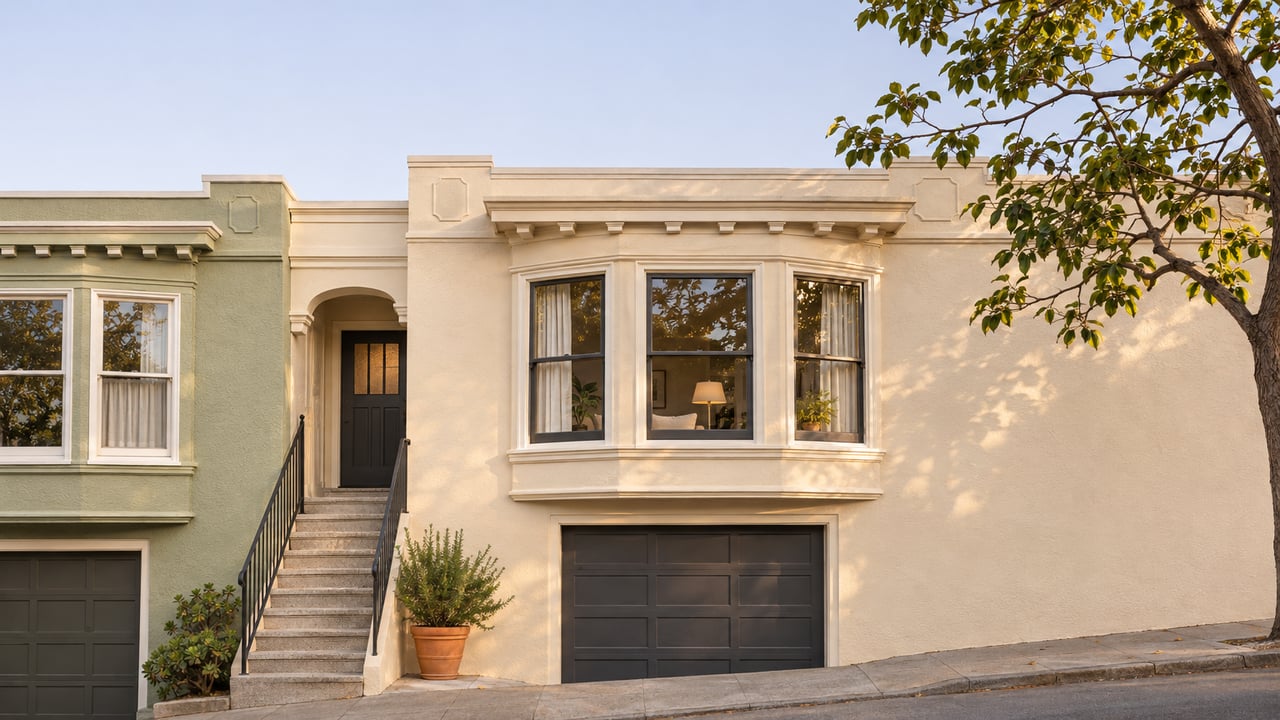
The Excelsior's homes are mostly modest detached houses from the early twentieth century, and the age of the buildings shapes this neighborhood in ways the street projects don't. Mission Local reported in February 2026 that Ben Bleiman, co-interim executive director of the Excelsior Action Group, had traced the corridor's empty storefronts mainly to the cost of plumbing and electrical upgrades in older buildings. The city's Office of Economic and Workforce Development responded with one-time grants of $50,000 to $100,000 for new businesses that fill those spaces. Mission Local also reported about 29 empty storefronts in the Excelsior, down from 60 in 2022. Some favorites have come back. Bravo Pizza reopened under new owners on January 22, 2026, after a two-month closure, according to Mission Local.
The commercial story is a useful guide for buyers because the houses come from the same era. In a neighborhood with this many older homes, two houses of similar size on the same block can close hundreds of thousands of dollars apart. The difference usually comes down to whether the plumbing, electrical work and foundation have already been updated. A $918 rate per foot is a quarterly median, and condition decides which side of it a particular house lands on. The smaller overbid helps here too. A buyer who isn't stretching $500,000 past the ask has more room left for inspections, contingency planning and the first round of work.
Vanguard's figures for the Excelsior group it with the Portola, and both the Excelsior/Portola count of 42 sales and the Sunset count of 33 are marked as small samples for the quarter. With that few sales, a couple of unusual houses can move a quarterly median noticeably. For any one house, the recent sales of similar homes on the same few blocks will tell you more than a district figure. The quarterly table does its job by showing the shape of the gap: a moderately lower rate per foot, smaller homes and a smaller overbid.
Are Excelsior homes selling below asking? Not on average. In Q3 2026, Excelsior/Portola single-family homes sold for an average of 115.8% of list price. That is above asking, but well below the Sunset's 137.9% for the same quarter.
Is the Mission Street construction finished? San Francisco Public Works lists all four segments of the Mission/Geneva project as complete, with overall completion in spring 2026.
How does the Excelsior compare with the Sunset per square foot? In Q3 2026, the Excelsior/Portola median was $918 per square foot and the Sunset's was $1,216, about a 25% difference. If you've been comparing the two, our Sunset District and Excelsior neighborhood pages give more background.
If your Sunset search keeps ending with offers that fall short, I can help you set Excelsior asking prices beside what nearby homes actually closed for, so you can see which listings truly fit your budget before you plan a weekend of tours. Let's Connect with Selina Zhao, and take a look at how I work with buyers, in English or Mandarin.
Stay up to date on the latest real estate trends.
I am dedicated to making your experience feel easy and personal. Your goals are the foundation of everything I do — from the first call to the closing table.
SELINA ZHAO | CA DRE# 02050480 VANGUARD PROPERTIES, INC. | CA DRE# 01486075